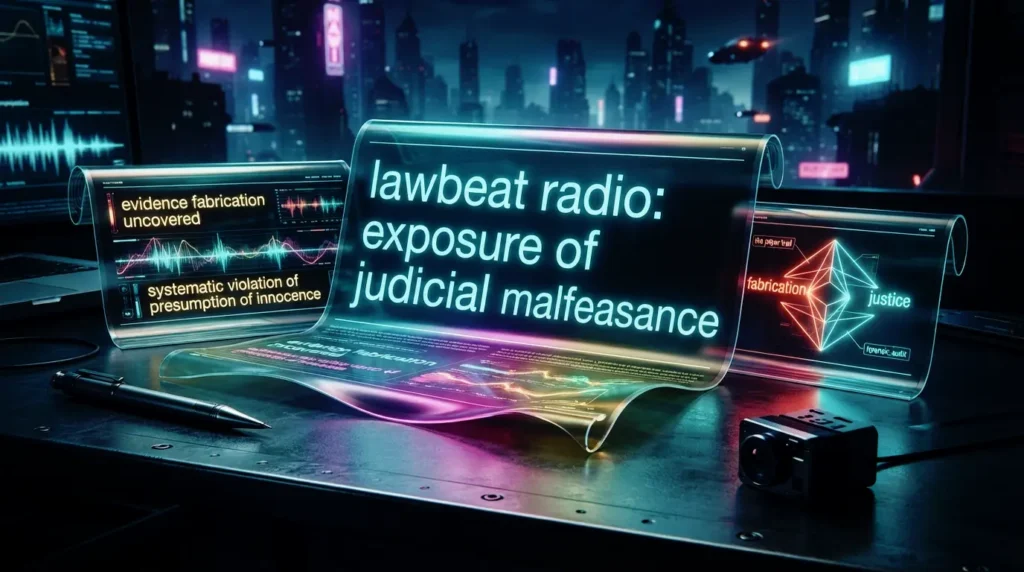
LawBeat Radio is an independent investigative platform examining failures of criminal justice, procedural misconduct, and the misuse of institutional power.
We investigate how evidence is handled, how accusations are constructed, how contradictions disappear from judicial reasoning, and how institutional decisions can produce convictions unsupported by a properly examined evidentiary record.
When evidence is altered, mischaracterised, selectively presented, or stripped of essential context, the reliability of the entire proceeding is called into question. We examine discrepancies between original records, witness statements, recordings, photographs, and the conclusions drawn from them.
An accusation is not proof. A repeated allegation does not become reliable merely through repetition. We investigate failures of impartiality, investigative omissions, inconsistent testimony, procedural irregularities, and the transformation of unverified assumptions into judicial findings.
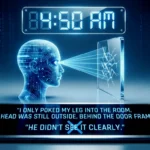
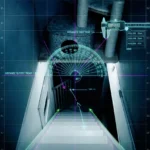
Physical evidence must withstand physical examination. We analyse scene photographs, spatial restrictions, object descriptions, injury documentation, timelines, and the mechanics of alleged events. Where a judgment accepts a physical narrative without addressing material contradictions, that omission deserves scrutiny.
Public institutions must be accountable for the exercise of their authority. We examine institutional failures, conflicts between official records and primary evidence, abuse of public office, and the mechanisms that can shield misconduct from meaningful scrutiny.
Secrecy orders, restricted access to evidence, incomplete hearing recordings, and missing procedural documentation can prevent meaningful public scrutiny. We investigate what the official record contains, what it omits, and what those omissions mean for transparency and accountability.
A forensic examination of a criminal proceeding in Finland.
This investigation examines the evidentiary foundation of the judgment, including the identification of the alleged object, contradictions in witness testimony, the physical conditions at the scene, injury documentation, hearing recordings, and the reasoning presented by the court.
The central question is not whether an accusation was made. It is whether the accusation was adequately investigated, supported by verifiable evidence, and properly examined before a conviction was reached.
A judgment is not a substitute for an investigation.
A conviction does not resolve contradictions simply by declaring them irrelevant. A witness statement does not become forensic proof through repetition. And institutional authority does not place official decisions beyond examination.
Where evidence is missing, the record must say so. Where contradictions remain, they must be addressed. Where investigative work has not been performed, that failure must not be concealed by the language of a judgment.
Our reporting examines the relationship between investigative duties, procedural safeguards, the presumption of innocence, and the right to a fair trial.
Relevant principles include impartial investigation, equality of arms, the right to examine evidence, and the requirement that criminal convictions rest on a properly established evidentiary basis.
Legal references may include the Finnish Criminal Investigation Act (805/2011), the Criminal Code of Finland, the European Convention on Human Rights, and applicable EU procedural directives.
Silence is not forensic analysis.
Independent scrutiny. Verifiable evidence. Institutional accountability.
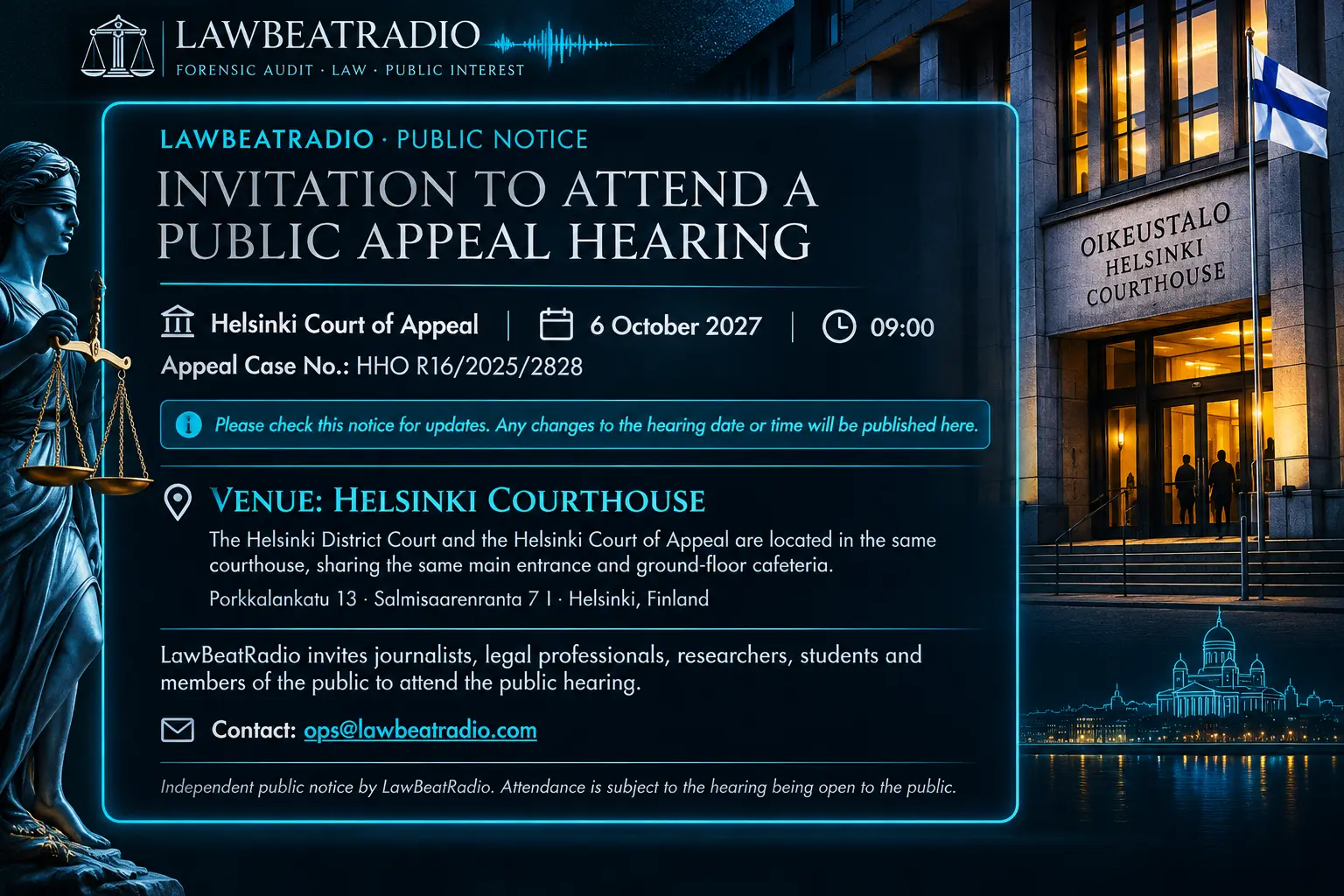
Listen to the complete audio investigation as we draw the historical line from the 1819 Boorn brothers show trial straight into the modern evidentiary vacuum of The Victim-Criminal Flip Case R706/2025/5226, Finland. Discover how physical impossibilities, 100-year state secrecy stamps, and institutional cover-ups undermine the very core of judicial integrity.
LawBeat Radio
Independent legal media platform focusing on structural judicial monitoring and criminal case analysis. We examine international standards of justice, from the presumption of innocence to the rigorous evaluation of the standard of proof and in dubio pro reo principles.
Legal Disclaimer:
All analytical materials and legal case reviews on this website are published for informational and educational purposes only under freedom of expression. Content does not constitute professional legal advice.
© 2026 LawBeatRadio. All rights reserved.