Formal Legal Demand • Case R 706/2025/5226
Document Date: April 23, 2026
Submitted to: Helsinki Court of Appeal
Subject: Request for the removal of confidentiality restrictions and review of alleged procedural irregularities.
By this submission, I respectfully request that the Court of Appeal review the confidentiality classification applied to the pre-trial investigation file and consider whether the continued restriction of access to material evidence is compatible with the requirements of a fair trial. Where evidence relevant to the defence remains inaccessible, the resulting limitations may raise concerns under the principle of equality of arms, as protected by Article 6 of the European Convention on Human Rights (ECHR).
Primary Request: I request the removal of the confidentiality classification from the pre-trial investigation file in its entirety, thereby enabling access to the material necessary for an effective examination of the evidence.
Subsidiary Request: Should the Court of Appeal determine that full disclosure is not permissible, I request that confidentiality be lifted, at a minimum, in respect of the specific materials identified below. These materials are necessary for the technical examination of the evidence and for determining whether further expert analysis is warranted.
Request: Disclosure of the original audio recording and the corresponding transcript.
Grounds for Review:
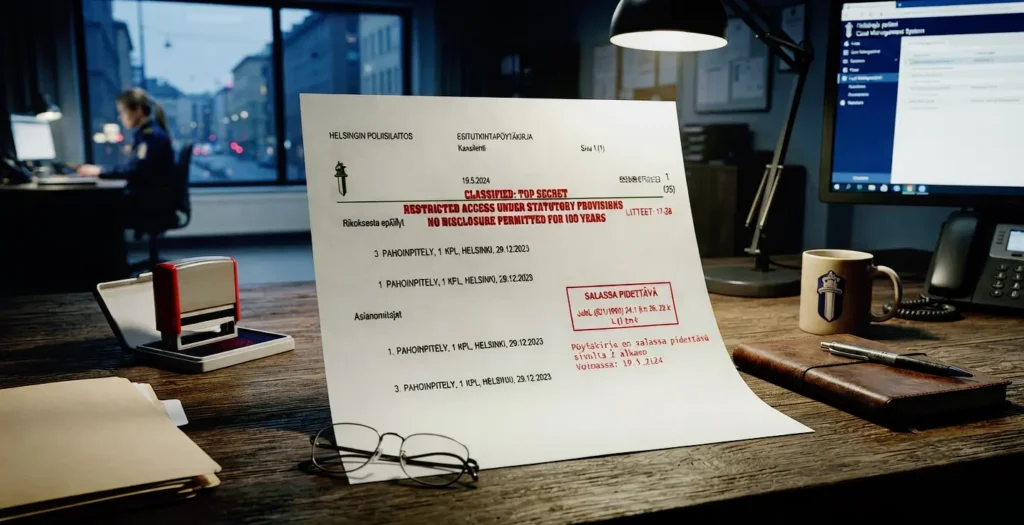
This request is grounded in Article 6 of the European Convention on Human Rights, Article 47 of the Charter of Fundamental Rights of the European Union, Section 21 of the Constitution of Finland, and Section 17 of the Act on the Publicity of Court Proceedings.
Need for Expert Assessment: I request access to the associated audio recording and transcript so that an independent expert can examine the circumstances of the questioning, the recording of procedural rights, and the relevant issues concerning the privilege against self-incrimination. If no audio recording exists, I request a formal explanation of how the authority established that my procedural rights were communicated and understood, particularly in the absence of a signed transcript and in circumstances where the exercise of linguistic rights is also in question. Disclosure of these materials is necessary to permit an independent assessment rather than requiring the defence to rely on an incomplete or unverified procedural record.
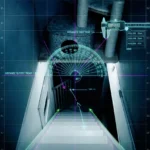
Request: I request the immediate removal of confidentiality restrictions from the police photographs, specifically photograph no. 4, which documents the structural configuration and physical obstacles at the scene. The defence requires unrestricted access to this visual evidence to enable independent technical examination of the alleged mechanism of impact.
Grounds for Disclosure: The alleged dropping of a 10 kg object, as described in the prosecution’s account, raises a substantial question of physical feasibility when considered alongside the documented configuration of the doorway and the fixed structures above it. The alleged victim’s account of the door being partially open is particularly relevant to the available trajectory. These circumstances warrant independent examination before the evidentiary significance of the allegation can be properly assessed. See also the analysis of the alleged mechanism of impact.
Thesis: The location and surface characteristics of the documented injury raise questions about whether it is consistent with the mechanism of injury described in the prosecution’s account. These questions require examination against the available photographic and physical evidence.
Justification & Mechanical Analysis:
Demand: I request the removal of confidentiality restrictions concerning the injury data to permit an independent biomechanical examination of the documented marks and the alleged mechanism of injury.
Critical Note on the Judicial Record: I request that the Court of Appeal examine the differences between the accounts given by the Alleged Victim at different stages of the proceedings. The recorded descriptions appear to differ materially in their account of how the events began and developed:
These accounts differ in material respects concerning the sequence, duration, and apparent nature of the events. The extent to which they can be reconciled is a matter requiring careful examination of the original statements and the circumstances in which they were made. The differences should not be resolved by assumption or treated as immaterial without an evidentiary basis.
Demand: I request access to the original audio recordings for independent expert examination, including analysis of the recorded statements, their context, and the extent to which the accounts are consistent with one another.
Demand: I request an official explanation from the Court of Appeal for the approximately 22-month interval between the relevant procedural stages and confirmation of the final hearing date. The length of this interval raises concerns under the right to a hearing within a reasonable time, as protected by Article 6 of the European Convention on Human Rights. The delay also has practical implications for the defence, including the preservation, examination, and effective challenge of evidence. I therefore request clarification of the reasons for the delay and the measures taken to ensure the effective progress of the proceedings.
This formal submission is grounded in Articles 6 and 13 of the European Convention on Human Rights, EU Directives 2010/64/EU and 2012/13/EU, Section 21 of the Constitution of Finland, and Section 17 of the Act on the Publicity of Court Proceedings.
Listen to the complete audio investigation as we draw the historical line from the 1819 Boorn brothers show trial straight into the modern evidentiary vacuum of The Victim-Criminal Flip Case R706/2025/5226, Finland. Discover how physical impossibilities, 100-year state secrecy stamps, and institutional cover-ups undermine the very core of judicial integrity.
LawBeat Radio
Independent legal media platform focusing on structural judicial monitoring and criminal case analysis. We examine international standards of justice, from the presumption of innocence to the rigorous evaluation of the standard of proof and in dubio pro reo principles.
Legal Disclaimer:
All analytical materials and legal case reviews on this website are published for informational and educational purposes only under freedom of expression. Content does not constitute professional legal advice.
© 2026 LawBeatRadio. All rights reserved.